Open-sourcing Social Change.
2014
A goal I had for this project when we began was to give Living Cities a website that highlighted all of the incredible work they were doing and then to get on a stage and talk about it.
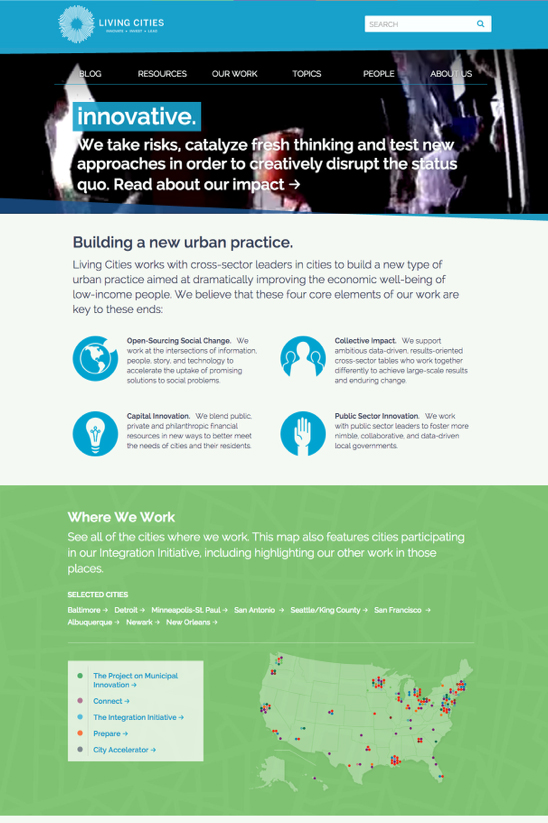
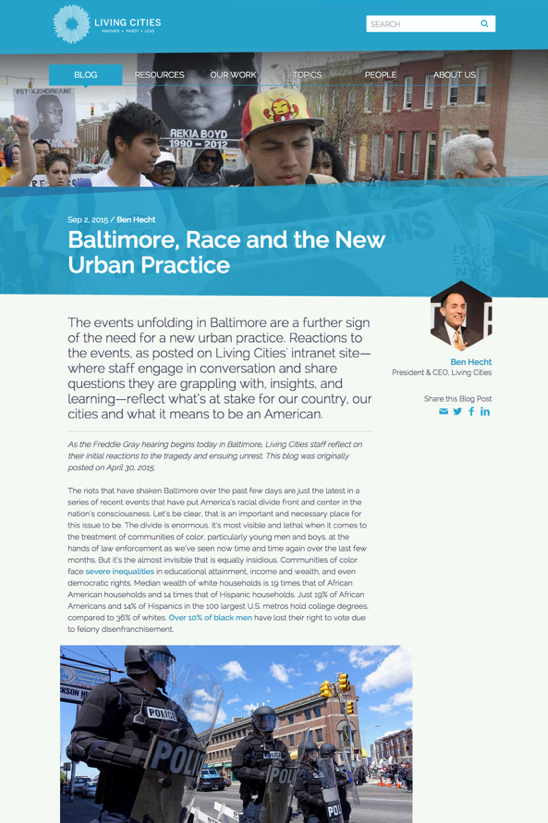
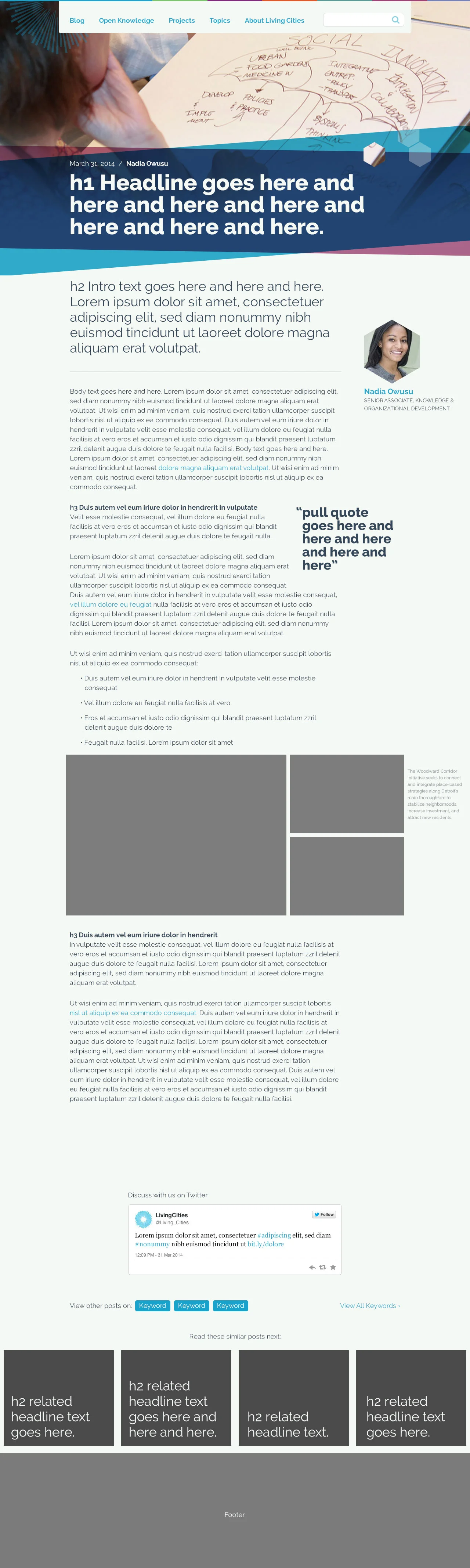
As Creative Director on this project, I collaborated closely with my UX, engineering, and digital strategy colleagues at Threespot to make livingcities.org the leading platform for sharing innovative solutions to urban poverty. I designed the site’s visual system and its features by showcasing the organization’s convening power and the outcome of their work as its foundation.
While I did succeed in my first goal – giving them a website that highlighted so many important initiatives with prominent partners, the stage I’m using to talk about it is right here.
Moodboards
After workshopping with the client, I moved onto moodboards. We used this time to invest in how we could utilize a dynamic color palette, take advantage of their extensive library of images that shows their convening power in action – not just words on paper, brings statistics to life, and provides unexpected rich layering and engagement throughout. The moodboard below is still one of my favorite visuals and I had a lot of fun working through the ideas and bringing this back to the client who loved it and was eager for us to get started and seeing how this would play out in various ways.

Project moodboard that focused on Living Cities convening power, demonstrated their impact, and elevated their shared learnings.
Markdown
One request they had for us: This needs to be innovative.
At the time, the first iPhone had just launched and the talk of innovation was everywhere. We knew we had our work cut out for us on this one. As we had learned more about how they were managing their current website–having to contact a vendor, ask them for changes, wait for a response, approve said changes, and then wait for it to update… it could take days. Often the changes required images, graphics, charts, or data visualizations.
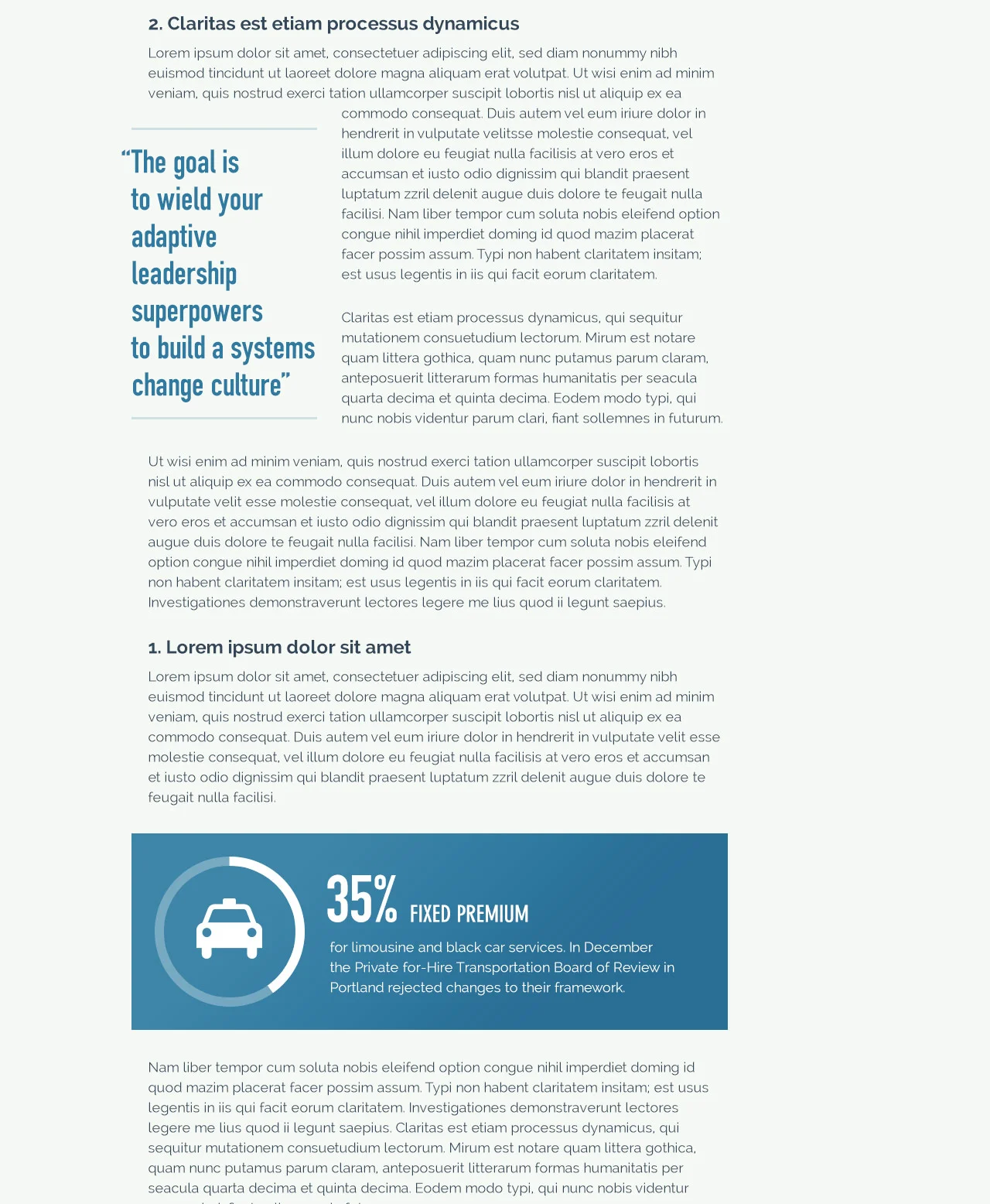
In addition to us giving them a new website that they would be able to manage on their own, we had our first innovation element for them: using Markdown that would allow them to update graphics, data visualizations, and more with a few lines of text in code. That turned out to be a powerful feature and we set them up with a library of styles to choose from, icons, and alternate layouts so that they could have a variety of ways to present information.
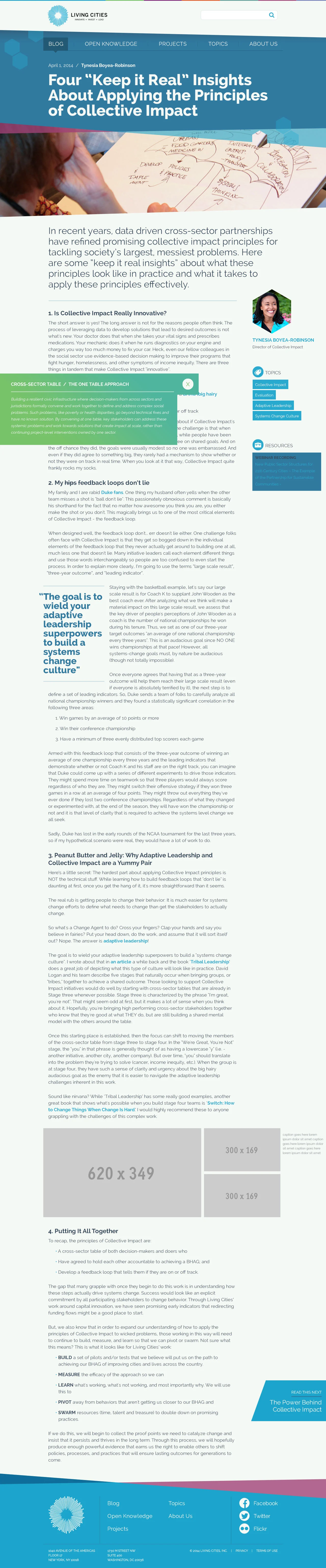
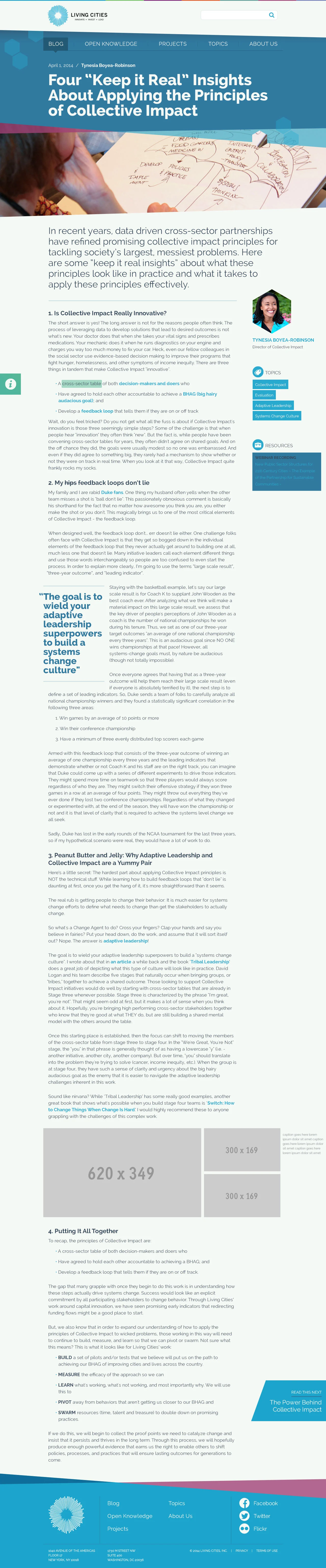
Our second innovation was creating an “engagement module” that would trigger at a certain location on the page as a user scrolled and would ask users a question or for feedback relative to the exact area they were reading.


Reflection
More than 10 years later this stands as one of my favorite projects. The client was fantastic to work with, the visual styling was fun to create, and how we brought in innovation–by giving even the most non-technical person a method for creating dynamic animated data visualizations. And lastly, it was an honor to be a small part of their mission of innovative solutions to urban poverty.