Redesigning USAP.gov
Bringing Antarctic Science to the Public
September 2020 thru January 2021
Client
National Science Foundation, Office of Polar Programs

My Role
Senior Product Designer
Scope
Discovery Research, Information Architecture, Content Strategy, Visual Design System
Key Deliverables
Research Plan, Synthesis Report, Content Audit, Content Guidelines, Visual Design System, Sitemap, Features Matrix, Product Roadmap
Overview
USAP.gov is the primary public-facing hub for the U.S. Antarctic Program – the main connection point between cutting-edge polar science and the general public, scientists, students, journalists, and everyone in between. When the National Science Foundation’s Office of Polar Programs came to us, the site had grown organically over time and wasn’t really designed with those different audiences in mind.
As Senior Product Designer, I partnered closely with a Senior Design Researcher who led the research activities. My contributions on the research side were taking notes, helping synthesize data, and translating findings into design direction. I owned all of the design work – the information architecture, visual design system, prioritization workshop, and product roadmap.
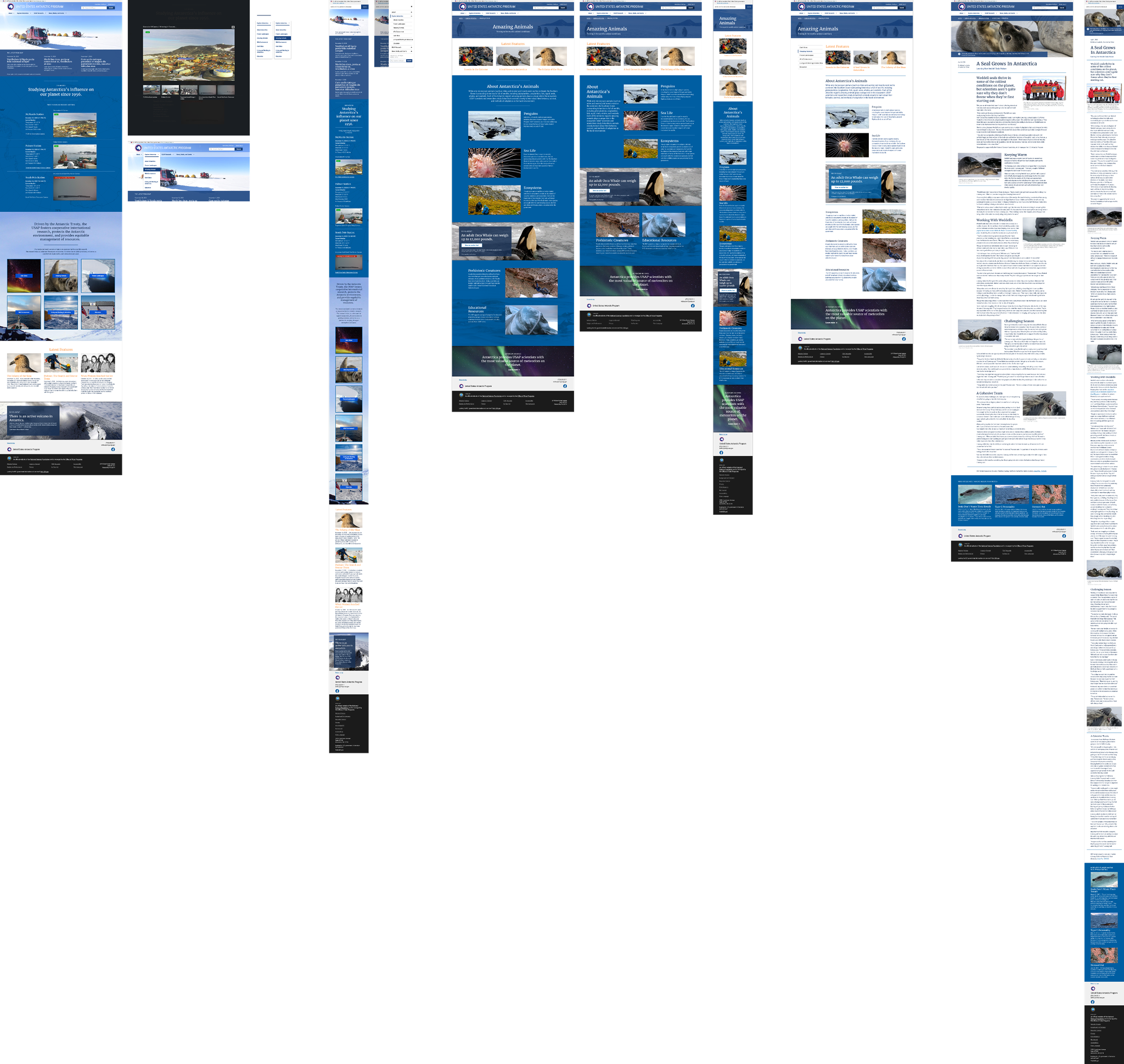
Screenshot of desktop and mobile UI for NSF USAP.gov
The Problem
The OPP needed a clear, honest picture of who was actually using the site, what they needed from it, and how to evolve the platform in a way that felt cohesive, modern, and genuinely useful. The challenge wasn’t just visual – it was structural and strategic.
The site served a wide range of audiences with very different goals: researchers looking for program logistics, students curious about Antarctic science, journalists covering polar expeditions, and members of the public who just wanted to understand what was happening down there. None of those experiences had been intentionally designed. They’d just accumulated.
Research & Discovery
Before touching anything in the design, we needed to understand the landscape. Our Senior Design Researcher led a discovery phase that included desk research, secondary research, qualitative interviews, and stakeholder conversations. I participated as a note-taker and synthesis collaborator. The goal was to get a clear read on:
Who was actually visiting USAP.gov and why
What content they were looking for and whether they could find it
What the internal team needed from the site to do their jobs
Where the gaps were between what existed and what users actually needed
Interview insights were documented and tagged in Dovetail, which made synthesis a lot more manageable. Our researcher ran card sorting and information architecture workshops remotely using Mural – essential tools for keeping collaboration going with a distributed team during the pandemic. I was in the room for all of it, helping capture and make sense of what we were hearing.
Card sorting template in Mural that was used to inform the final IA and sitemap.
Turning Research Into Direction
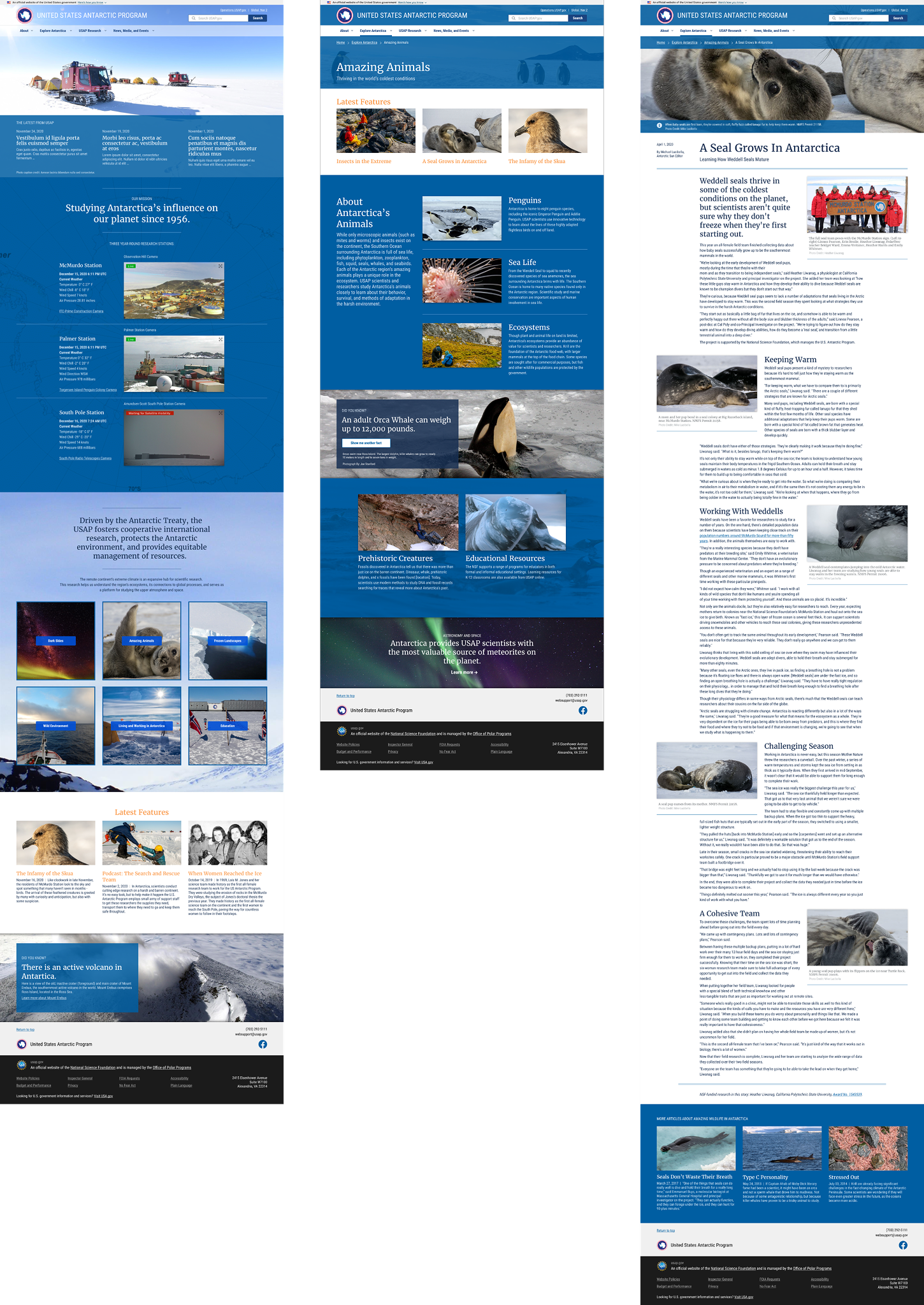
Final design of a topic page.
After synthesizing everything together, our researcher led the production of a synthesis report built around three user archetypes and nine key findings. I contributed to the synthesis process and helped translate those findings into design and prioritization decisions. The archetypes – distilled from real interviews – helped the OPP team build genuine empathy for their users. Not “the public” as an abstract concept, but real people with specific goals, habits, and frustrations when trying to find information about Antarctic research.
Nine key findings
Follow a vision that aspires to recreate Antarctica.
Demonstrate Antarctica's richness.
Use your visual content.
Capture users attention with narrative funnels.
Make content feel fresh.
Enable human connections with Antarctica.
Separate content for grantees and support.
Improve the webcam experience.
Fix what's broken.
The nine findings captured the core problem areas and became the backbone for every design and prioritization decision that followed. If a potential feature addressed multiple findings, it moved up the list. If it didn’t connect back to a real user need, we questioned whether it belonged on the roadmap at all.
“Good research doesn’t just answer the question in front of you – it equips teams to keep making smart decisions long after the engagement is over.”
That philosophy shaped how I approached the design work. My job was to take what our researcher uncovered and translate it into a system, a roadmap, and a visual language that the OPP team could actually use long after our engagement ended.
Facilitating the Big Decisions
One of the things I’m most proud of on this project was the prioritization workshop I designed and led. Once we’d identified all the opportunity areas and potential features, someone had to make sense of it all and help the client figure out what to build first.
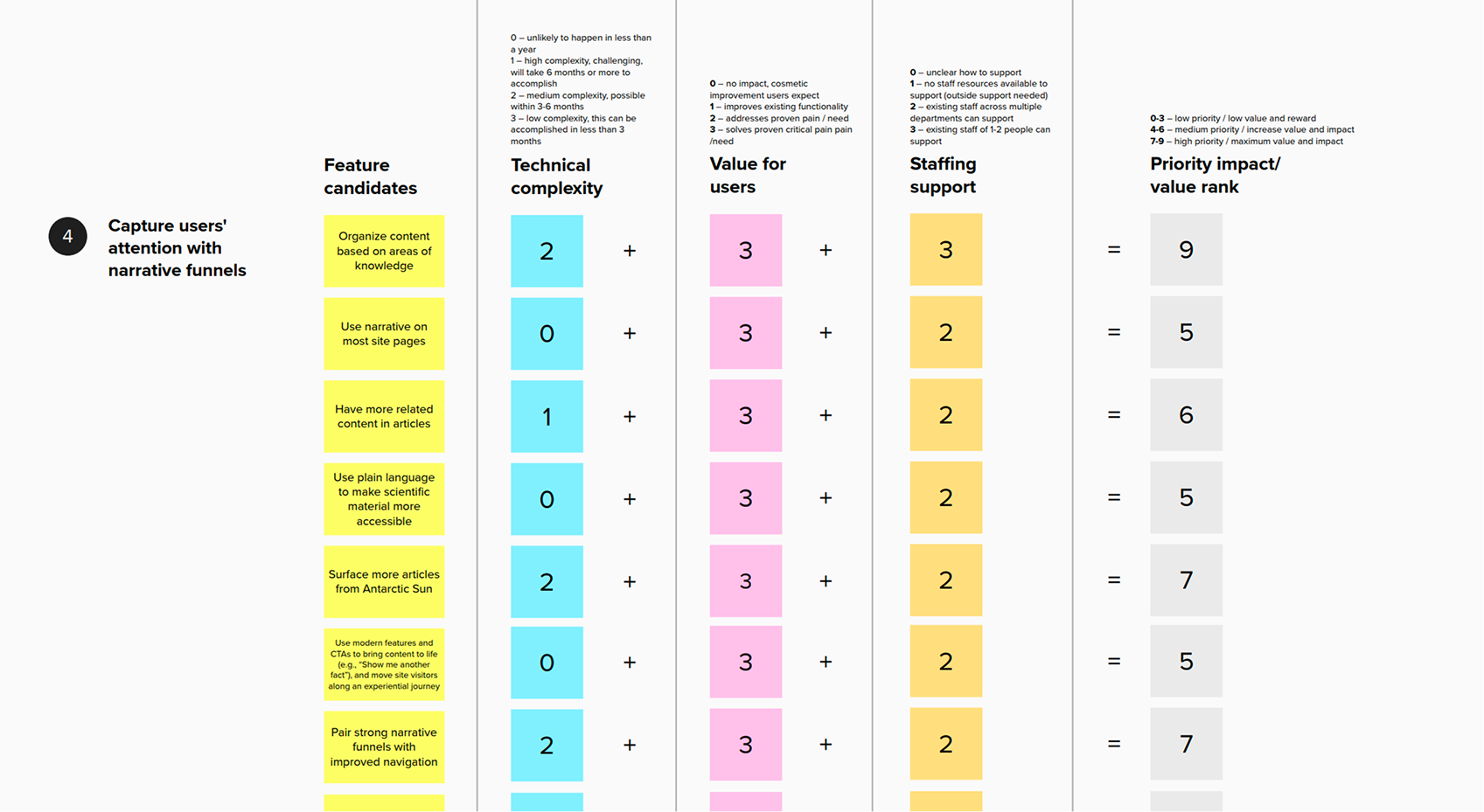
One section from a remote prioritization workshop.
I facilitated a two-hour virtual workshop with the OPP client and stakeholders using Mural. We worked through every potential feature together, scoring each one across three dimensions:
Feasibility = how technically realistic it was given their constraints
Level of effort = how much time and resources it would take to implement
Staff resourcing = what capacity their team actually had
This scoring exercise gave us an objective foundation to build the 18-month product roadmap on. Instead of decisions being driven by whoever was loudest in the room, everything was grounded in a shared framework the whole team had participated in creating. The client walked away with confidence in the roadmap because they’d helped build it.
Screenshot of 18 month roadmap developed from a prioritization workshop.
What We Delivered
Screenshot of the features and functionality matrix that was created to plan out the 18 month product roadmap.
Over four months, we produced a full suite of research and design artifacts:
Research Plan – project goals, recruitment methods, screening criteria, and discussion topics
Research Protocol – interview questions, tasks, and card sorting exercises
Synthesis Report – three archetypes, nine key findings, and actionable recommendations
Content Audit – a full inventory of site pages by content type, owner, and audience
Content Guidelines – direction on tone, voice, length, style, and appropriate topics
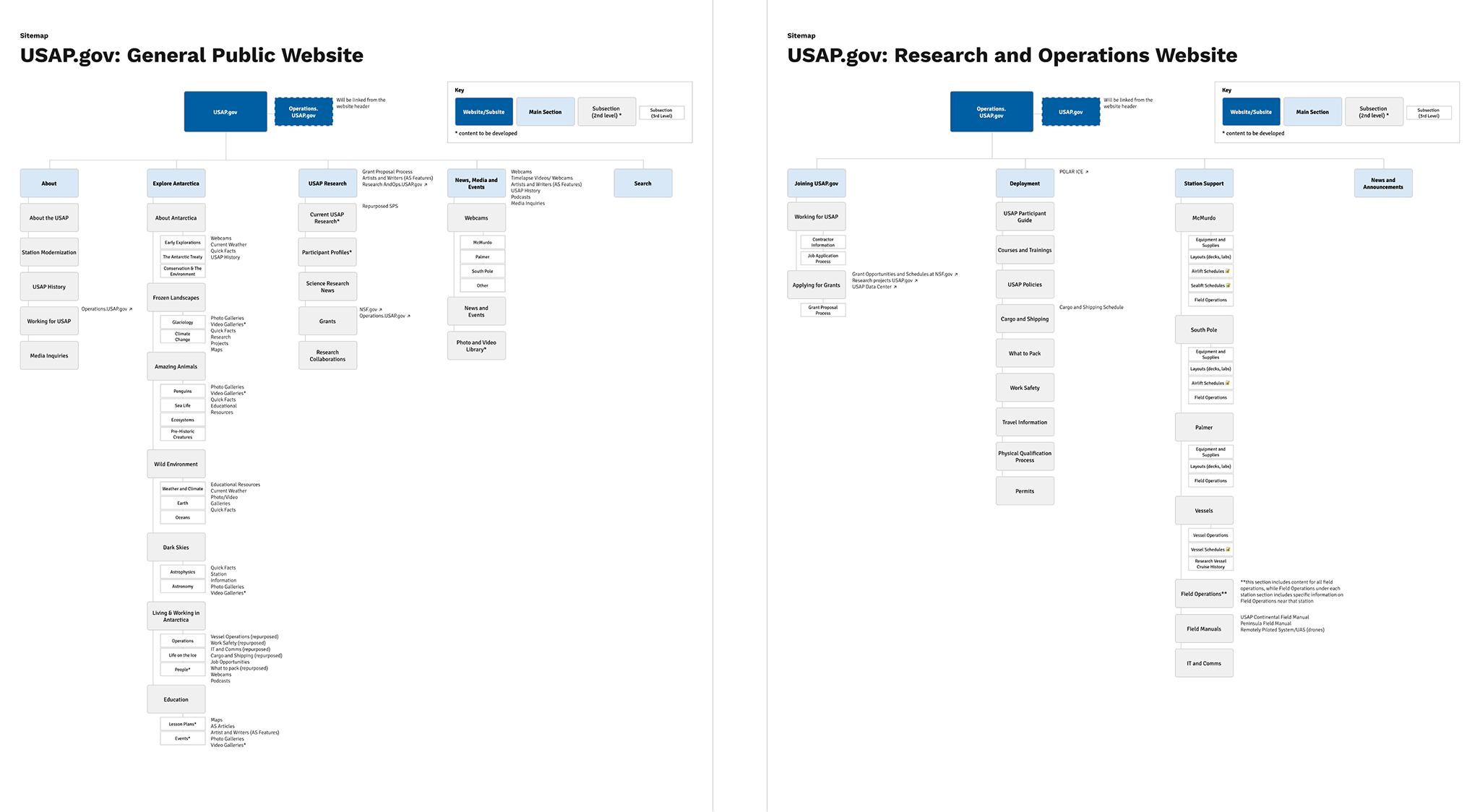
Sitemap – a recommended site architecture based on user research, with gap analysis
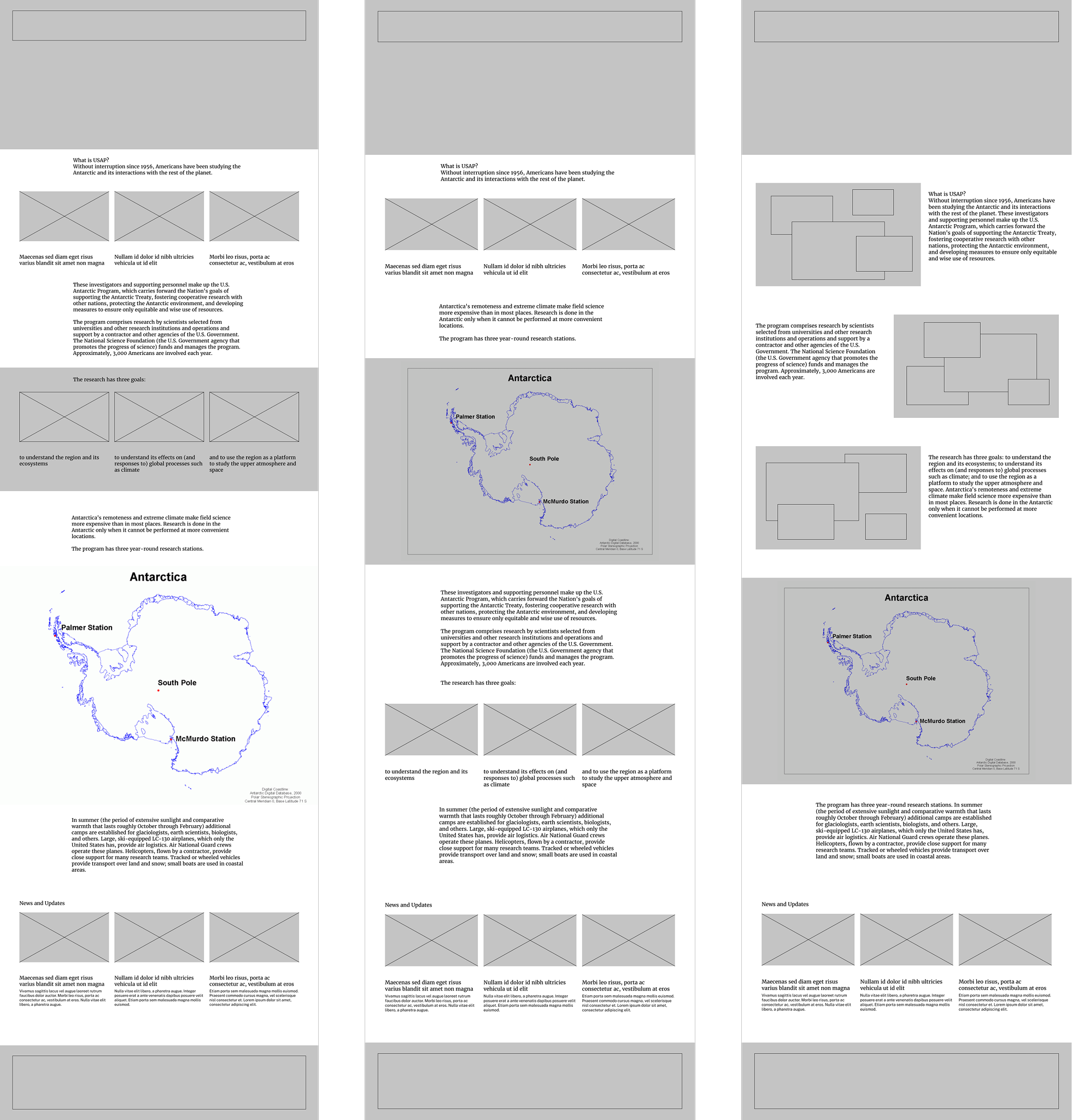
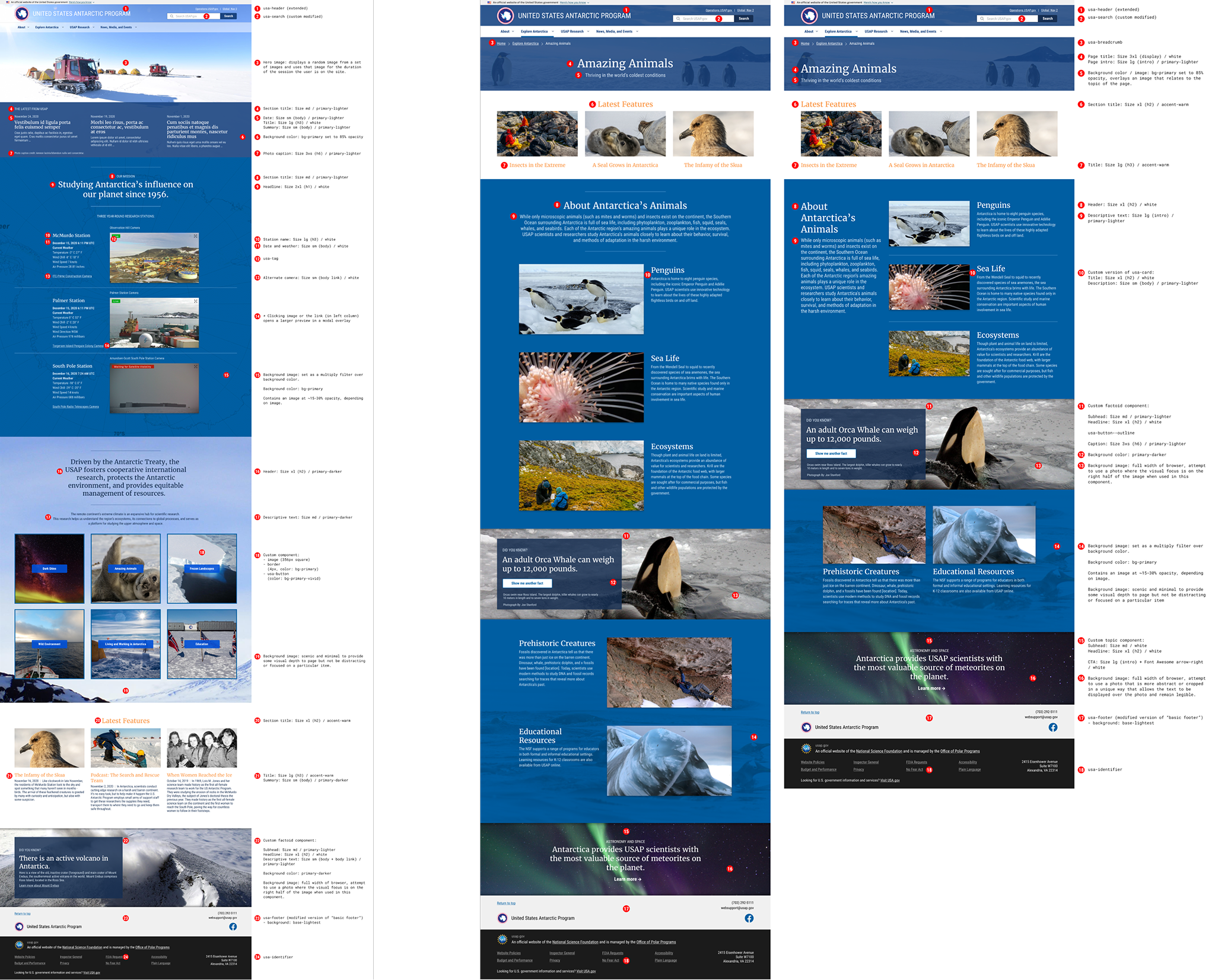
Visual Design System – a Figma UI kit built on USWDS with custom components, delivered as an accessible online library and an annotated PDF
Features & Functionality Matrix – a living document listing features by priority and effort
Product Roadmap – an 18-month strategic plan mapping out the path forward
The Visual Design System deserves a callout. It wasn’t just about how the site looks – it was about giving the OPP team and future developers a consistent, scalable foundation they could use to build and maintain the site long after our engagement ended.
Tools & Technology
Research & Collaboration
Dovetail for interview documentation and tagging. Mural for remote card sorting, information architecture workshops, and the prioritization session. Airtable for the content audit, participant surveys, and monitoring research participant diversity.
Design
Figma for the sitemap, visual design system, USWDS component library, and custom component creation.
Communication
Zoom for meetings. Slack and Google Drive for async collaboration and reviews.
What I Took Away
More than any individual deliverable, what I’m proud of is the foundation we laid. The OPP team now has a shared language for talking about their users, a prioritized roadmap built on real data, and a design system that sets them up for consistency as the site evolves.
This project was a reminder that great design work doesn’t happen in isolation. Having a strong research partner meant I could focus on what I do best – translating insights into systems, facilitating alignment, and building something the client could grow with. The most impactful thing I contributed wasn’t a single screen or artifact. It was the strategic clarity that came from being embedded in the research process and using it to drive every design decision forward.